
What Are the Different Types of Bottle Caps?
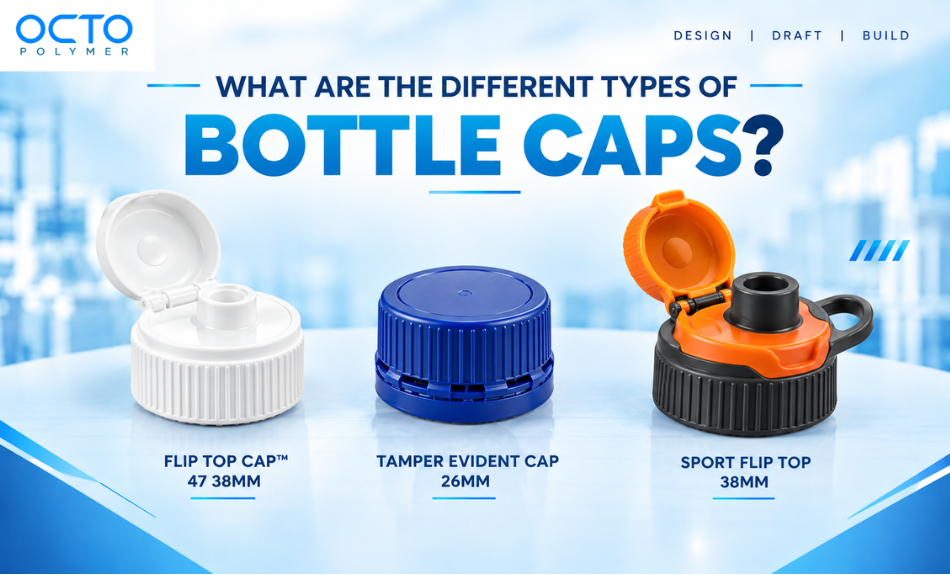
Bottle caps may look like simple components, but they play an important role in protecting products, preventing leaks, and maintaining freshness. The right closure depends on the bottle material, product type, filling method, and intended use. From everyday water bottles to beverage containers and industrial packaging, manufacturers use different closure designs to meet specific requirements. Understanding the different types of bottle caps helps manufacturers, packaging companies, and product designers select the right option for their applications. An experienced plastic product manufacturer can help develop bottle caps with suitable materials, reliable sealing, and functional designs. In this guide, we explore common bottle cap designs, materials, features, applications, and the factors to consider when choosing the right closure.
Why Are Bottle Caps Important?
A bottle cap does more than close a container. It creates a seal that helps protect the contents from the outside environment. Understanding what are the types of bottle caps can help manufacturers and packaging companies choose the right closure for their products.
A properly designed bottle cap can help:
-
Prevent liquid leakage during storage and transportation
-
Protect contents from dust and contamination
-
Maintain product freshness and quality
-
Make bottles easy to open and close
-
Support tamper-evident packaging for added safety
-
Improve the overall appearance of the product
-
Provide a secure fit for different packaging applications
The right cap depends on the bottle neck size, thread design, material, and product requirements. Choosing a suitable bottle cap helps ensure reliable sealing, convenient use, and effective product protection.
Common Types of Bottle Caps
Bottle caps are available in many shapes, sizes, and materials. Their design usually depends on the product and intended use.
Screw Caps
Screw caps are among the most widely used closures. They have internal threads that match the threads on the bottle neck.
They are commonly used for:
- Drinking water
- Soft drinks
- Juices
- Cooking oils
- Household products
- Personal care products
Their simple design allows consumers to open and reseal the bottle easily.
Flip-Top Caps
Flip-top caps have a hinged section that opens and closes without completely removing the cap from the bottle.
They are useful for products that need frequent dispensing, such as shampoos, liquid soaps, sauces, and personal-care products.
Sports Caps
Sports caps are designed for convenient drinking while moving or exercising. They often include a pull-up, push-pull, or squeeze mechanism.
These closures are frequently found on sports drinks, reusable bottles, and active-lifestyle packaging.
Disc-Top Caps
Disc-top closures have a small disc that can be pressed on one side to open the dispensing hole.
They are commonly used for shampoos, conditioners, lotions, and other products where controlled dispensing is important.
Dropper Caps
Dropper closures combine a bottle cap with a dispensing mechanism that releases small quantities of liquid.
They are often used for products such as essential oils, cosmetic liquids, specialty chemicals, and some pharmaceutical packaging.
Different Types of Beer Caps and Beverage Closures
Beer and beverage packaging requires closures that provide reliable sealing and help protect carbonation and product quality.
Common options include:
- Crown caps
- Screw-off metal caps
- Plastic closures
- Specialty beverage closures
Crown caps are commonly associated with glass beer bottles. They use a crimped design that fits securely around the bottle neck.
For beverages, closure selection can depend on carbonation levels, bottle material, filling equipment, shelf life, and consumer convenience.
A Complete Guide to Bottle Cap Materials, Their Properties, and Packaging Uses
Plastic bottle caps are commonly produced through high-speed manufacturing processes such as injection molding or compression molding.
A typical process includes:
- Material preparation – Plastic resin is selected according to the closure requirements.
- Molding – The material is formed into the required cap shape.
- Thread formation – Internal threads or other closure features are created.
- Cooling – The molded caps are cooled and stabilized.
- Inspection – Dimensions, appearance, and sealing characteristics are checked.
- Packaging – Finished closures are packed and prepared for use.
Manufacturing accuracy is important because even small dimensional variations can affect the fit between the bottle and cap.
Types of Water Bottle Caps Colour
Cap colour can be used for branding, product identification, or visual differentiation. Manufacturers may produce closures in a wide range of colours using suitable pigments or masterbatch.
For example, a company may use different colours to distinguish product variants, flavors, sizes, or packaging lines.
However, cap colour does not necessarily indicate a universal standard. Its meaning depends on the brand or manufacturer.
Types of Lids for Containers
Although the terms cap and lid are sometimes used interchangeably, container closures come in many forms.
Common options include:
- Screw-on lids
- Snap-fit lids
- Flip-top lids
- Push-on covers
- Dispensing closures
- Child-resistant closures
- Tamper-evident closures
The right closure depends on the container’s shape, opening size, product characteristics, and expected consumer use.
For example, a food container may require a wide-mouth lid for easy access, while a liquid bottle may need a threaded cap with a sealing liner.
How to Choose the Right Bottle Cap
Several factors should be considered before selecting a closure.
Bottle Neck Compatibility
The cap must match the bottle neck dimensions and thread specifications. A poor match can result in leakage or difficulty opening the container.
Product Type
Liquid viscosity, chemical properties, carbonation, temperature, and sensitivity to contamination can influence closure selection.
Opening and Dispensing
Consider how consumers will use the product. A screw cap may be suitable for products opened occasionally, while a flip-top or sports closure may be more convenient for frequent use.
Tamper Evidence
Products sold to consumers may require tamper-evident features that show whether the package has previously been opened.
Production Requirements
The closure should work efficiently with the intended filling, capping, labeling, and packaging equipment.
Custom Bottle Cap Sizes and Designs for Different Packaging Requirements and Applications
Bottle closures are produced in different diameters and thread configurations to accommodate various packaging formats.
Some closures are designed specifically for smaller bottles, while others are intended for larger beverage or household containers. For example, a Milton bottle cap only 750ml may be designed specifically to fit a particular bottle model rather than being universally compatible with every 750 ml container.
This is why bottle volume alone should not be used to select a replacement cap. The neck finish, thread type, diameter, and sealing design should also be checked.
Benefits of Well-Designed Bottle Caps
A properly designed closure can provide several advantages:
- Leak prevention: Creates a secure connection between bottle and cap.
- Product protection: Helps protect contents from external contamination.
- Consumer convenience: Makes opening, closing, and dispensing easier.
- Brand differentiation: Colour, shape, and finish can support product branding.
- Manufacturing efficiency: Standardized closures can support high-volume production.
- Shelf-life support: A reliable seal helps protect the product during storage and transportation.
Future Trends in Bottle Cap Manufacturing
Bottle closure development is increasingly focused on lightweight designs, improved recyclability, convenient consumer features, and efficient production.
Manufacturers are also exploring designs that use less material while maintaining sufficient strength and sealing performance. Recyclable materials and packaging designs that support recycling are becoming increasingly important.
Another area of development is connected and tamper-evident packaging, where closures can provide additional information or security features.
Conclusion
Bottle caps are an essential part of modern packaging. From simple screw closures to flip-top, sports, dispensing, and tamper-evident designs, each type serves a specific purpose. Material selection, bottle neck compatibility, sealing performance, product requirements, and consumer convenience should all be considered when choosing a closure. For manufacturers, selecting the right cap design can improve packaging performance while supporting efficient production and a better user experience.
Looking for reliable plastic bottle cap manufacturing solutions? Contact us to discuss your packaging requirements.