
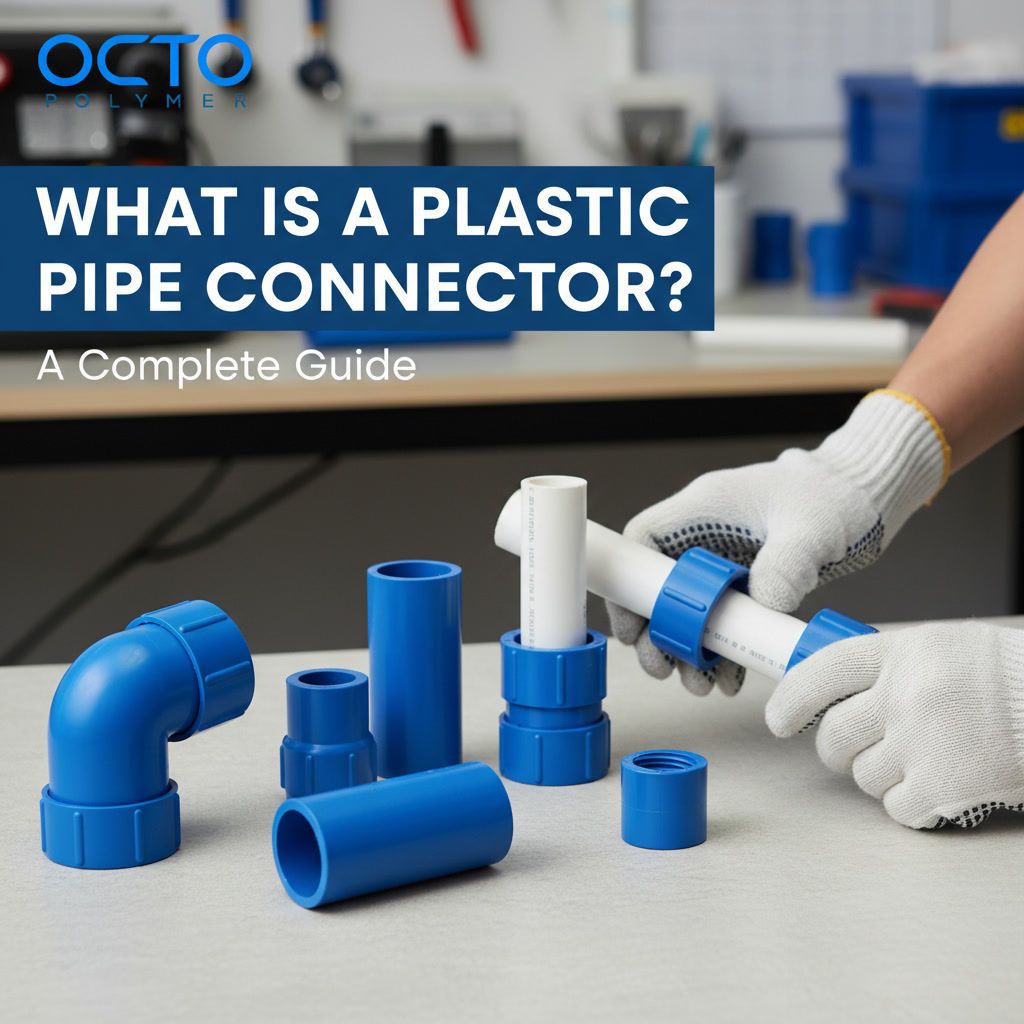
What Is a Plastic Pipe Connector?
A plastic pipe connector is a small but important component used to join, extend, redirect, or connect plastic pipes in plumbing and fluid-handling systems. These connectors are available in different shapes, sizes, materials, and connection styles to suit residential, commercial, and industrial applications. Depending on the system, a connector may join two pipes, connect a pipe to a tap, or transition between different materials. Plastic pipe connectors are popular because they are lightweight, corrosion-resistant, easy to install, and available in many configurations. Plastic parts manufacturing services providers can also develop custom pipe connectors based on specific design, material, size, and application requirements. In this guide, we will explain what plastic pipe connectors are, the main types available, where they are used, and how to choose the right one
Why Are Plastic Pipe Connectors Used?
When understanding what is a plastic pipe connector, it is important to consider the complete operating environment rather than choosing a fitting based only on pipe diameter. Selecting the right plastic pipe connector helps ensure a secure fit, reliable performance, and long-term durability.
Factors to Consider When Choosing a Plastic Pipe Connector
Pipe Material: Check compatibility with PVC, CPVC, PE, PP, or other pipe materials.
Pipe Size: Choose the correct diameter and connection dimensions for a proper fit.
Pressure Requirements: Ensure the connector can handle the system’s operating pressure.
Temperature: Check the minimum and maximum operating temperatures.
Fluid Compatibility: Confirm that the connector material is suitable for the liquid or gas being transported.
Connection Type: Select the appropriate threaded, solvent, compression, push-fit, or fusion connection.
Application: Consider whether the fitting is intended for plumbing, irrigation, industrial piping, or other uses.
What Are the Different Types of Plastic Pipe Connectors?
Different piping layouts require different fitting designs. Some of the most common types include elbows, tees, couplers, reducers, adapters, unions, and end caps.
1. Plastic Coupler
A coupler connects two pipes of the same or compatible diameter. It is useful when extending a pipeline or joining two separate pipe sections.
2. Plastic Elbow
An elbow changes the direction of a pipe. Common angles include 45 and 90 degrees.
They are frequently used where a pipeline needs to turn around corners or navigate equipment and structures.
3. Plastic Tee
A tee fitting has three openings and allows a pipeline to branch into another direction.
Tee connectors are commonly used in water distribution, irrigation, plumbing, and industrial fluid systems.
4. Plastic Reducer
A reducer connects pipes with different diameters. It allows the piping system to transition from a larger pipe to a smaller one or vice versa.
Reducers are available in different designs depending on the connection requirements.
5. Plastic Adapter
An adapter connects pipes or fittings that have different connection types or materials.
For example, a plastic adapter may be used when connecting a threaded component to a plastic pipe.
6. Plastic Union
A union allows two pipe sections to be connected and disconnected more easily than a permanent connection.
This makes unions useful around pumps, filters, valves, and other equipment that may require maintenance.
7. Plastic End Cap
An end cap closes the end of a pipe. It may be used temporarily during installation or as a permanent part of a piping system.
How Does a Plastic Pipe Connector Work?
A plastic pipe connector creates a continuous flow path between two pipes or components while maintaining a secure connection. Understanding what is a plastic pipe connector helps manufacturers, installers, and buyers choose the right fitting for their piping systems.
Depending on the design and application, plastic pipe connectors can be joined using different methods, including:
Threaded connections: Screw together to create a secure joint.
Solvent cement: Bonds compatible plastic pipes and fittings.
Push-fit connections: Allow quick installation without complex tools.
Compression fittings: Use a compression mechanism to secure the pipe.
Heat fusion: Joins compatible plastic components using heat.
Mechanical connections: Use fastening mechanisms to hold components together.
The suitable connection method depends on the pipe material, fitting design, pressure requirements, and intended application. Choosing the right plastic pipe connector and joining method helps ensure a reliable connection and supports the efficient operation of the piping system.
Common Applications of Plastic Pipe Connectors
Manufacturers can produce many types of customized components, including:
- Automotive plastic parts
- Plastic housings and covers
- Brackets and clips
- Connectors
- Gears and bushings
- Electrical components
- Industrial machine parts
- Pipe fittings
- Enclosures
- Custom molded components
Industries Using Custom Plastic Parts
Custom plastic parts are used across many industries.
Automotive
Plastic clips, brackets, covers, connectors, and interior components.
Electrical & Electronics
Housings, enclosures, connectors, and insulation components.
Industrial
Machine components, protective covers, and functional plastic parts.
Consumer Products
Handles, housings, covers, and other customized components.
Construction & Plumbing
Pipe connectors, fittings, and plastic accessories.
Connecting Plastic Pipes to Different Components
Plastic Pipe Connector to Tap
A pipe-to-tap connection requires the correct adapter or threaded fitting. The fitting must match the pipe size and the tap connection to prevent leaks and ensure a secure installation.
Plastic Tap Connector for Washing Machine
Washing machines commonly require water supply connections that match the appliance inlet and the plumbing pipe. The correct connector helps create a secure connection and supports reliable water flow.
Copper to Plastic Pipe Connector
When joining copper and plastic pipes, a suitable transition fitting is normally required. The connector must be compatible with both materials and the operating conditions of the system.
What Causes a Plastic Pipe Connector to Leak?
A leaking connector can result from several factors. The problem is not always caused by the fitting itself.
Common causes include:
- Incorrect fitting size
- Loose threaded connection
- Damaged threads
- Poor installation
- Incorrect sealing material
- Excessive pressure
- Temperature-related movement
- Damaged or worn seals
Using the correct fitting and following the manufacturer’s installation instructions can help reduce the risk of leakage.
Benefits of Plastic Pipe Connectors
Plastic fittings are widely used because they offer several practical advantages.
Corrosion Resistance
Many plastics do not rust or corrode like traditional metal fittings. This makes them useful in water and certain chemical applications.
Lightweight Construction
Plastic connectors are generally lighter than metal fittings, making them easier to transport, handle, and install.
Easy Installation
Depending on the fitting design, plastic connectors can be installed using threaded, push-fit, solvent, compression, or fusion methods.
Wide Range of Designs
Manufacturers can produce plastic fittings in many shapes, sizes, and configurations to meet different piping requirements.
Cost Efficiency
Plastic fittings can provide a cost-effective option for many plumbing, water management, and industrial applications.
How to Choose the Right Plastic Pipe Connector?
Before selecting a connector, consider the complete operating environment rather than choosing based only on pipe diameter.
Consider These Factors
- Pipe material: Check whether the fitting is compatible with PVC, CPVC, PE, PP, or another pipe material.
- Pipe size: Select the correct diameter and connection dimensions.
- Pressure: Make sure the fitting can handle the required operating pressure.
- Temperature: Check the maximum and minimum operating temperatures.
- Fluid: Confirm that the material is suitable for the liquid or gas being transported.
- Connection type: Determine whether you need threaded, solvent, compression, push-fit, or fusion connection.
- Application: Consider whether the fitting will be used for plumbing, irrigation, industrial piping, or another purpose.
Future of Plastic Pipe Fittings
Plastic pipe fitting technology continues to develop as industries look for lighter, durable, and efficient piping solutions.
Manufacturers are focusing on improved materials, better sealing systems, more precise molding processes, and designs that simplify installation.
Injection molding also allows manufacturers to produce complex connector shapes with consistent dimensions. As demand for efficient water systems, industrial piping, and modern plumbing continues to grow, plastic fittings are expected to remain an important part of these systems.
Conclusion
Plastic pipe connectors play an important role in joining and managing modern piping systems. From couplers and elbows to tees, reducers, adapters, and unions, each fitting serves a specific purpose. Choosing the right connector requires attention to pipe material, size, pressure, temperature, fluid type, and connection method. With proper selection and installation, plastic connectors can provide reliable performance across plumbing, irrigation, industrial, and equipment applications.
Looking for custom plastic components or injection molding solutions? Contact us Octo Polymer to discuss your requirements.