
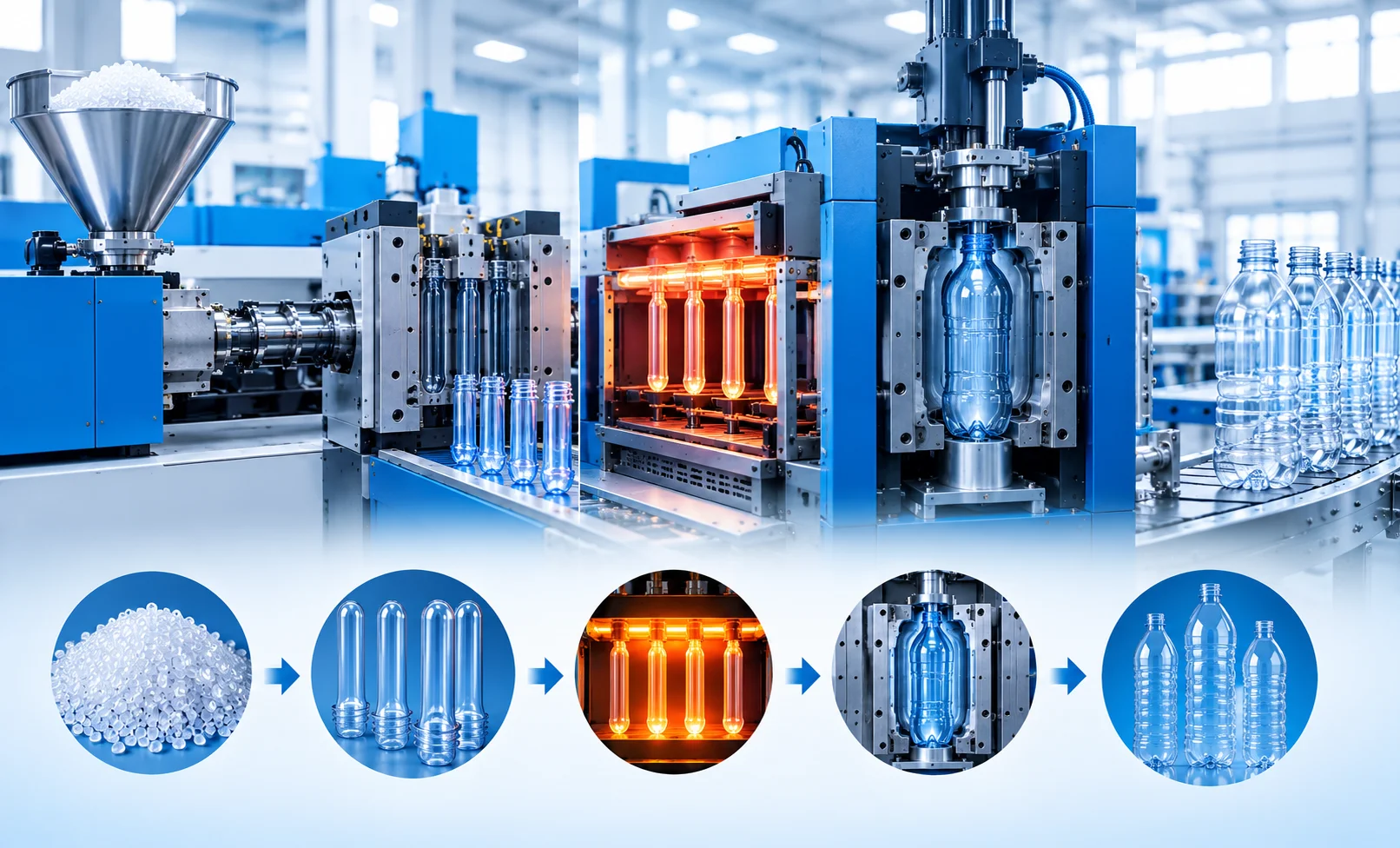
OEM plastic components are custom-made plastic parts produced for a specific product or application. They are commonly used in industries such as automotive, electronics, medical equipment, consumer products, and industrial machinery. Injection molding is a widely used manufacturing process for producing these components with consistent quality, accurate dimensions, and complex designs.
The process starts with understanding the customer’s requirements and ends with testing and delivering the finished parts. By combining proper planning, suitable materials, and efficient injection molding techniques, manufacturers can produce plastic components that are accurate, durable, and suitable for their intended use.
What Are OEM Plastic Components?
OEM stands for Original Equipment Manufacturer. OEM plastic components are parts made according to a customer’s design, drawings, or product requirements.
These parts are not standard products. They are designed to fit a particular product or machine.
Some common examples include:
- Plastic covers and housings
- Automotive interior parts
- Brackets and clips
- Connectors
- Plastic gears
- Machine components
- Electrical enclosures
- Medical equipment parts
How Are OEM Plastic Components Made?
1. Understanding the Requirements
The first step is to understand what the plastic part needs to do.
The manufacturer looks at the required size, shape, strength, appearance, quantity, and working conditions. This information helps determine the right material and manufacturing process.
2. Creating the Design
Next, engineers create a 3D CAD model of the plastic component.
The model shows the exact shape and size of the part. It also includes important details such as holes, openings, mounting points, and other features.
The design is checked before production to identify possible problems early.
3. Choosing the Right Plastic Material
Different applications require different types of plastic. The right material is selected based on the part’s strength, flexibility, temperature, chemical resistance, and cost.
Common materials include:
- ABS – commonly used for covers and housings
- PP – lightweight and resistant to many chemicals
- PC – strong and impact resistant
- Nylon – useful for mechanical parts
- POM – often used for gears and moving parts
- PEEK – used for demanding applications
- TPU and TPE – suitable for flexible parts
4. Checking the Design for Manufacturing
Before production, the design is reviewed to make sure it can be manufactured properly.
Engineers check areas such as wall thickness, corners, holes, ribs, and draft angles. This helps reduce common problems like warping, cracks, or uneven surfaces.
A good design can also help reduce production time and cost.
5. Making the Mold or Tool
For injection molded parts, a mold is created based on the final design.
The mold gives the plastic its required shape. A properly designed mold helps produce accurate and consistent parts during production.
6. Making a Prototype
Before starting large-scale production, a prototype may be created.
A prototype allows the customer and manufacturer to check the part’s size, shape, fit, appearance, and function.
Prototypes can be made using methods such as 3D printing, CNC machining, or prototype tooling.
If any problem is found, the design can be changed before mass production begins.
7. Manufacturing the Plastic Parts
Once the design and prototype are approved, production starts.
For injection molding, plastic material is heated and placed into a mold under pressure. The plastic cools inside the mold and takes its final shape.
Depending on the part, other methods such as CNC machining, 3D printing, blow molding, or thermoforming may also be used.
8. Finishing and Assembly
Some plastic parts need additional work after manufacturing.
This may include:
- Trimming
- Drilling
- Painting
- Printing
- Surface finishing
- Welding
- Assembly
These processes prepare the part for its final use.
9. Quality Checking
The finished parts are checked to make sure they meet the required specifications.
Manufacturers may check the dimensions, surface finish, weight, color, strength, and overall fit.
Quality inspection helps ensure that every batch of parts is consistent and ready for use.
Benefits of OEM Plastic Components
Custom OEM plastic components offer several benefits:
- Parts can be designed for a specific product.
- Plastic parts can be lightweight.
- Complex shapes can be produced.
- Different materials can be selected based on requirements.
- Suitable processes can be used for small or large production runs.
- Consistent production can help maintain product quality.
- Custom designs can help improve product performance.
Where Are OEM Plastic Components Used?
Manufacturers select cap materials based on performance, cost, appearance, and compatibility with the product.
Polypropylene
PP is widely used for plastic closures. It is lightweight, durable, and suitable for injection molding.
High-Density Polyethylene
HDPE provides good stiffness and chemical resistance. It is used for various household, chemical, food, and personal-care containers.
Metal
Metal closures are used for applications requiring a different appearance or sealing method. Beverage and specialty packaging may use aluminum or steel-based closures.
Specialty Materials
Certain applications may require materials with specific resistance, flexibility, temperature performance, or regulatory properties.
How to Choose an OEM Plastic Components Manufacturer?
When choosing an OEM plastic components manufacturer, look for a company with experience in plastic design, material selection, prototyping, tooling, and production.
It is also important to consider product quality, production capacity, delivery time, technical support, and overall cost.
A manufacturer that can support the project from design to final production can make the process easier and help avoid manufacturing problems.
Conclusion:
Designing and manufacturing OEM plastic components involves several simple but important steps. It starts with understanding the product requirements, creating the design, selecting the right material, and making a prototype. After approval, the parts are manufactured, finished, and inspected.
Choosing the right OEM plastic components manufacturer can help businesses produce reliable, cost-effective, and application-specific plastic parts.